
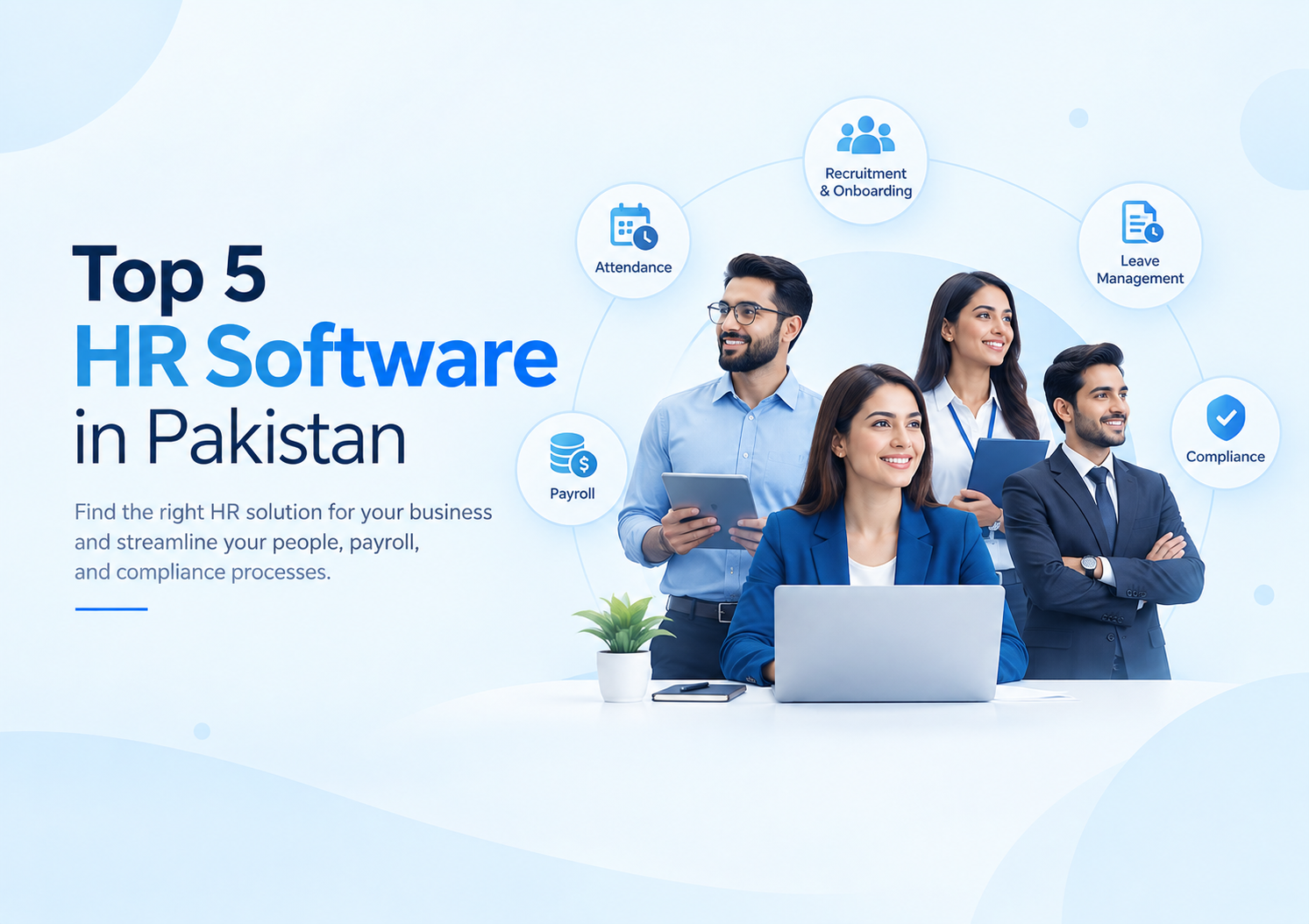
Choosing the top HR software in Pakistan can make a significant difference in how efficiently a business manages employees, payroll, attendance, leave, performance, and other HR activities. As organizations move from manual records and spreadsheets to digital systems, finding the right HR software in Pakistan has become an important consideration for businesses of all sizes.
In this guide, we compare five HR software options relevant to businesses researching solutions for the Pakistani market: People.Partners, BambooHR, Zoho People, Darwins HR, and Kredily. We look at their intended use cases, features to evaluate, and the factors businesses should consider before choosing an HR management system.
Whether you are a growing SME looking for SME HR software in Pakistan or a larger organization that needs integrated HR and payroll processes, this comparison can help you create a shortlist based on your requirements. The most suitable solution will depend on your workforce, local payroll needs, integrations, budget, and the features available in your selected plan.
1. People.Partners – HR and Payroll Software in Pakistan
Best for: Pakistani organizations looking for HR, payroll, attendance, and employee lifecycle management in one platform.
People.Partners is a locally developed HR software solution designed for organizations that need to manage multiple stages of the employee lifecycle. Its stated areas of coverage include recruitment and onboarding, attendance, payroll, performance management, and employee separation.
For businesses evaluating HR payroll software, local payroll requirements and the ability to align the system with company policies are important considerations. People.Partners is an option to evaluate when these needs are central to the buying decision.
Key Features of People.Partners
- Payroll automation and support for relevant local payroll requirements
- Biometric, mobile, and geofencing attendance capabilities
- Leave and shift management
- Performance management
- Recruitment and onboarding
- Employee separation, clearance, and exit interviews
- HR reports and dashboards
- Employee self-service mobile app
Why consider People.Partners?
Businesses that want to connect attendance, leave, employee records, and payroll should assess how these functions work together in their intended configuration. Before implementation, confirm the availability of required modules, integrations, payroll rules, and compliance-related calculations with the provider.
For more information, visit Softronic Systems and explore People.Partners.
2. BambooHR
Best for: SMEs needing strong employee records and performance tools
BambooHR is known for its clean design and user-friendly experience. While pricing is higher, it’s widely used by multinational companies operating in Pakistan.
Key Features:
- Employee database
- Leave & approval workflows
- Performance reviews
- Onboarding tools
- Reporting & analytics
3. Zoho People
Best for: Companies wanting customizable HR processes
Zoho People offers strong HR automation and integrates easily with the Zoho ecosystem. It’s popular in Pakistan due to flexible pricing.
Key Features:
- Attendance & shift management
- Leave tracking
- Document storage
- Performance management
- Workflow automation
4. Darwins HR
Best for: Small to mid-sized companies needing HR and payroll tools
Darwins HR is used across various industries in Pakistan and supports core HR activities with automated payroll.
Key Features:
- Online attendance
- Payroll & tax calculations
- HR document management
- Employee self-service
5. Kredily
Best for: Startups and small businesses
Kredily is a simple HR and attendance software used globally, including in Pakistan, primarily by small teams.
Key Features:
- Attendance & shift tracking
- Leave management
- Basic payroll tools
- Employee database
How to Choose the Best HR Software for Your Company
When comparing the Top HR software in Pakistan, look beyond the number of features or promotional claims. The right system should match your workforce size, payroll requirements, HR workflows, integrations, budget, and long-term growth plans.
1. Size of your team:
Smaller teams may prefer straightforward tools for employee records, leave, and attendance. Growing companies may need more comprehensive capabilities for payroll, recruitment, performance, approvals, reporting, and employee self-service.
Consider both your current workforce and the administrative complexity you expect as the business expands.
2. Payroll complexity and Local Requirements:
Payroll requirements can vary according to employee compensation, allowances, deductions, benefits, company policies, and applicable legal obligations.
If you are comparing HR payroll software, assess whether the system can handle your salary structure, payroll approvals, relevant tax calculations, and applicable contributions or deductions. Depending on your workforce and location, this may include EOBI, provincial social security arrangements such as SESSI where applicable, and current salary income tax rules.
Do not assume that a platform is compliant simply because it advertises payroll automation. Ask how rules are maintained, how changes are applied, and whether payroll calculations can be reviewed before finalization.
3. Attendance hardware and integrations:
If your organization uses biometric devices, mobile attendance, geofencing, or other attendance systems, confirm that the selected HR platform supports the required integrations and workflows.
Also consider integrations with accounting systems, ERP applications, banking or payment processes, and other tools your business relies on. Clarify whether integrations are included, require additional development, or involve separate charges.
4. Customer Support and Implementation
Accessible support can be especially useful during implementation and when resolving payroll, attendance, integration, or employee data issues.
Ask each provider about onboarding, data migration, administrator training, response times, ongoing support, and the process for handling urgent payroll-related issues. Local support may be useful for Pakistani organizations, but the actual service level should be confirmed rather than assumed.
5. Budget and Total Cost of Ownership
Compare the total cost rather than looking only at the advertised subscription price. Consider:
- Implementation and configuration fees
- Per-employee or per-user charges
- Additional modules and integrations
- Data migration and training
- Ongoing support and maintenance
- Future costs as the organization grows
International tools may quote prices in foreign currencies, while local providers may offer pricing arrangements suited to the Pakistani market. Compare actual quotations and the functionality included in each proposal.
Why Consider People.Partners for Pakistani Businesses?
Among the options in this comparison, People.Partners is worth evaluating if your organization wants a locally focused HR platform covering several stages of the employee lifecycle.
Its stated areas of coverage include:
- HR processes aligned with organizational policies and local requirements
- Biometric, mobile, and remote attendance capabilities
- Payroll automation
- Employee lifecycle management, from recruitment to separation
- HR reporting and employee self-service
For organizations looking for the best HR software in Pakistan, the key question is how well a solution fits their actual workflows—not whether it carries a “best” or “number one” label.
People.Partners may be a suitable option for businesses that want to evaluate HR, attendance, and payroll capabilities together. Before making a decision, request a demonstration and verify the modules, payroll rules, integrations, implementation scope, support arrangements, and pricing relevant to your organization.
Explore Softronic Systems to learn more about People.Partners and discuss your HR software requirements.
FAQS
1. Which is the best HR software in Pakistan?
The best HR software depends on your organization’s workforce size, payroll complexity, required modules, integrations, budget, and support needs. People.Partners, BambooHR, Zoho People, Darwins HR, and Kredily are options to evaluate, but their suitability should be determined through current product information and a requirements-based comparison.
2. Are international HR tools good for Pakistani companies?
Yes, but they often lack local payroll integration and can be expensive due to USD pricing.
3. What features should HR software include?
A business may need employee records, attendance, leave management, payroll, performance management, recruitment and onboarding, employee self-service, reporting, and integrations. The appropriate combination depends on the organization’s size and processes. Pakistani businesses should pay particular attention to local payroll requirements and the ability to maintain company-specific rules.
4. Is HR payroll software useful for SMEs in Pakistan?
Yes. HR payroll software can help SMEs organize employee information, reduce repetitive administrative work, connect attendance and leave data with payroll, and make routine HR processes easier to manage.
When choosing SME HR software in Pakistan, consider ease of use, implementation effort, total cost, local payroll requirements, support, and the ability to add capabilities as the business grows.
Ready to Explore People.Partners?
Choosing HR software is an important operational decision. The right solution should help your team manage employee information, attendance, leave, payroll, and other HR processes in a way that fits your organization.
Contact Softronic Systems to discuss People.Partners and request a demonstration. Share your workforce size, current HR processes, payroll requirements, and integration needs so your team can evaluate the solution against its actual business priorities.