
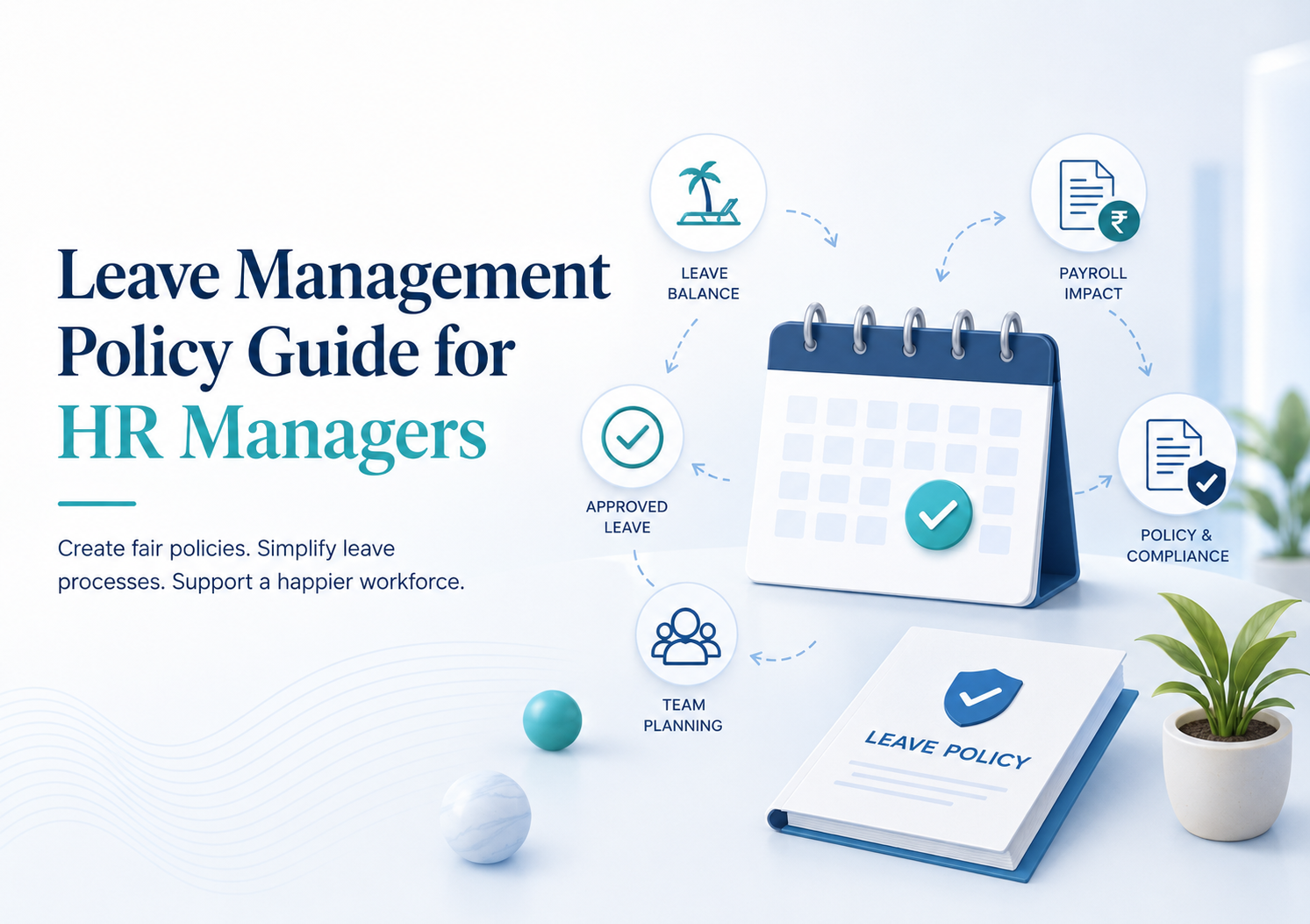
Managing employee leave looks simple until the business starts growing. A small team may handle leave requests through WhatsApp, email, or Excel. But once the company adds multiple departments, shifts, branches, payroll rules, hybrid teams, and different approval levels, leave tracking becomes a serious HR control issue.
A well-designed leave management system Pakistan businesses can rely on helps HR managers move from manual approvals to structured, transparent, and compliant leave management. It supports leave requests, approvals, balances, attendance, payroll, reporting, and employee self-service in one connected process.
This guide explains how HR managers in Pakistan can create a practical leave management policy, avoid common mistakes, and use leave management software Pakistan companies can scale with confidence.
What Is Leave Management?
Leave management is the process of planning, recording, approving, tracking, and reporting employee time off.
It covers the complete leave lifecycle:
- Employee checks leave balance.
- Employee submits a leave request.
- Manager reviews team availability.
- HR or manager approves, rejects, or asks for clarification.
- Leave is recorded in the employee’s leave balance.
- Attendance and payroll are updated.
- HR keeps records for reporting and compliance.
In many companies, leave management is treated as a small administrative task. In reality, it affects workforce productivity, employee experience, payroll accuracy, compliance, and operational planning.
For example, if a production supervisor approves too many employees’ annual leave during peak season, the factory may face staffing shortages. If HR records sick leave incorrectly, payroll may deduct salary unfairly. If leave balances are not updated, employees may lose trust in HR records.
That is why employee leave management needs a clear policy and a reliable process.
What Is a Leave Management Policy?
A leave management policy is a written HR policy that explains how employees can take time off from work.
It defines:
- Types of employee leave
- Eligibility rules
- Leave entitlement
- Leave accrual
- Leave application process
- Leave approval workflow
- Documentation requirements
- Leave balance tracking
- Leave carry forward
- Leave encashment
- Leave without pay
- Public holidays
- Payroll impact
- Recordkeeping rules
A strong leave management policy protects both the employee and the employer. Employees know what they are entitled to. Managers know how to approve leave fairly. HR knows how to record leave consistently. Payroll teams know how leave affects salary.
Without a written policy, companies often rely on personal judgment. That creates inconsistent decisions, favoritism concerns, disputes, and payroll confusion.
Why Every Pakistani Business Needs a Leave Management Policy?
Businesses in Pakistan deal with different working models, including office-based teams, factory staff, retail branches, hospitals, field teams, sales teams, hybrid employees, and remote workers.
Each group may have different leave needs.
A manufacturing company may need strict shift coverage. A hospital must ensure 24/7 staffing. A retail chain must manage branch rosters. A software company may offer flexible or hybrid leave rules. A school may align leave with academic calendars.
A documented leave policy helps HR managers handle these situations fairly.
Practical Example
Suppose two employees apply for annual leave during the same week. One works in finance, and the other works in production. The finance employee’s absence may be manageable, but the production employee’s absence may affect shift coverage.
A good policy allows managers to review:
- Business need
- Team availability
- Leave balance
- Notice period
- Previous leave pattern
- Urgency of request
- Approval hierarchy
This avoids random decisions and protects operational continuity.
Types of Employee Leave in Pakistan
Leave types may vary by province, industry, company policy, employee category, and contract terms. HR teams should always verify applicable law before finalizing a leave policy Pakistan employees will rely on.
Below are the common types of employee leave used by Pakistani businesses.
Annual Leave
Annual leave is planned paid time off that employees can use for rest, travel, personal work, or family needs.
A good annual leave policy should define:
- When annual leave becomes available
- How many days employees receive
- Whether leave accrues monthly or yearly
- Minimum notice period
- Maximum consecutive days
- Carry-forward rules
- Encashment rules
- Approval process
- Blackout periods, if any
HR Tip
Do not wait until year-end to review annual leave balances. HR should monitor unused leave throughout the year to avoid sudden staffing gaps and large encashment liabilities.
Casual Leave
Casual leave is usually used for short personal matters, urgent work, or unexpected situations.
A casual leave policy should explain:
- Number of casual leave days
- Whether leave can be taken as half-day
- Whether prior approval is required
- Whether casual leave can be combined with annual leave
- Whether unused casual leave expires
- Who approves casual leave
Casual leave is often mismanaged when managers approve it informally through calls or messages. This creates missing records and payroll disputes.
Sick Leave
Sick leave allows employees to take time off due to illness or medical needs.
A sick leave policy should define:
- Number of sick leave days
- Whether medical documentation is required
- Rules for short sickness versus long illness
- Whether sick leave can be taken as half-day
- How repeated sick leave is reviewed
- How medical confidentiality is protected
HR Tip
Avoid asking employees to share unnecessary medical details with line managers. HR should collect only relevant documentation and protect employee privacy.
Maternity Leave
Maternity leave supports female employees during childbirth and recovery.
A maternity leave policy should clearly explain:
- Eligibility
- Leave duration
- Required documentation
- Salary treatment
- Notice requirements
- Return-to-work process
- Job continuity
- Extension options
- Breastfeeding or flexibility support, where applicable
Maternity leave is both a compliance and employee experience issue. HR should handle it with sensitivity and consistency.
Paternity Leave
Paternity leave allows male employees to support their spouse and newborn child.
A paternity leave policy should define:
- Eligibility
- Duration
- Notice requirements
- Required documentation
- Whether leave is paid or unpaid
- Whether it can be taken immediately after birth
- How it appears in payroll records
Forward-looking companies include paternity leave as part of a family-friendly HR policy.
Unpaid Leave
Unpaid leave is time off that does not count as paid leave and may reduce salary.
A policy should define:
- When unpaid leave is allowed
- Who can approve it
- How it affects salary
- How it affects benefits
- Whether it affects service continuity
- Maximum duration
- Documentation requirements
Unpaid leave should never be used casually when paid leave is available unless company policy and employee consent support it.
Compensatory Leave
Compensatory leave is time off given in exchange for working on a holiday, weekly off, or extra working period.
A compensatory leave policy should define:
- Who is eligible
- Which work qualifies
- Approval before extra work
- Validity period
- Whether unused compensatory leave expires
- Whether it can be encashed
This is especially useful for retail, healthcare, manufacturing, security, and operations teams.
Public Holidays
Public holidays are official holidays observed by the organization.
HR should define:
- Which holiday calendar applies
- Whether the company follows federal, provincial, bank, or industry holidays
- How holidays affect shift workers
- What happens if an employee works on a public holiday
- Whether substitute holidays are allowed
A leave calendar in the HRMS helps employees and managers see holidays before approving leave.
Leave Without Pay
Leave without pay is often used when an employee has exhausted paid leave but still needs time off.
The policy should explain:
- Approval authority
- Salary deduction rules
- Benefit impact
- Maximum allowed duration
- Documentation
- Impact on payroll and attendance
- Whether repeated leave without pay triggers review
Leave without pay should be visible in payroll integration to prevent manual salary errors.
Components of a Strong Leave Management Policy
A strong leave management policy should be practical, legally reviewed, and easy to apply.
1. Leave Eligibility
Define who is eligible for each leave type. Eligibility may depend on:
- Employment status
- Probation status
- Contract type
- Full-time or part-time role
- Service duration
- Location
- Employee category
2. Leave Entitlement
Leave entitlement defines how many days employees can take. It should answer:
- How many days are allowed?
- Are they paid or unpaid?
- Are they calculated yearly or monthly?
- Do new employees receive prorated leave?
- What happens when an employee resigns?
3. Leave Accrual
Leave accrual means leave is earned over time.
For example, annual leave may be credited monthly instead of all at once. This helps HR avoid overuse by employees who leave mid-year.
4. Leave Approval Hierarchy
Define the approval chain.
Common examples:
- Employee → Line Manager → HR
- Employee → Supervisor → Department Head → HR
- Employee → Manager → HR → Payroll
A leave approval hierarchy should match the company structure, not create unnecessary delays.
5. Leave Carry Forward
Leave carry forward allows unused leave to move into the next year.
The policy should define:
- Which leave types can be carried forward
- Maximum carry-forward limit
- Expiry date
- Whether approval is required
6. Leave Encashment
Leave encashment means paying employees for unused leave.
HR should define:
- Which leave types qualify
- When encashment is allowed
- Calculation formula
- Approval authority
- Payroll treatment
7. Documentation
Documentation may be needed for sick leave, maternity leave, bereavement leave, or extended absence.
The policy should avoid excessive documentation for minor leave while protecting the company from misuse.
8. Compliance
HR compliance Pakistan requirements may differ by province, sector, and employee category. A leave management policy should be reviewed by qualified legal or HR compliance professionals before publication.
9. Leave Records
The company should maintain accurate leave records, including:
- Requests
- Approvals
- Rejections
- Balances
- Adjustments
- Carry forward
- Encashment
- Payroll impact
- Audit trail
A leave management system Pakistan businesses can trust should preserve these records in a searchable format.
Common Leave Management Challenges
- Manual leave tracking creates duplicate entries, missing approvals, wrong balances, lost applications, unclear leave history, and no audit trail.
- Excel can cause formula errors, version confusion, weak security, difficult reporting, and no proper approval workflow.
- Payroll errors happen when unpaid leave, sick leave, leave without pay, encashment, or attendance records are not updated correctly.
- Policy violations occur when employees take more leave than allowed or managers approve leave without checking balances and staffing needs.
- Approval delays happen when leave requests depend on email, paper forms, or manual follow-ups.
- Employee dissatisfaction increases when balances are inaccurate, approvals are unfair, or rejection reasons are unclear.
How a Leave Management System Solves These Problems
A leave management system Pakistan HR teams can use effectively does not only digitize a form. It connects people, policies, approvals, attendance, and payroll.
Workflow Automation
Employees submit leave requests online. The system sends the request to the correct manager based on the approval hierarchy. HR does not need to manually forward applications.
Employee Self-Service
Employees can view:
- Leave balances
- Leave history
- Holiday calendar
- Request status
- Approved leave
- Pending approvals
- Policy information
This reduces routine HR queries.
Manager Dashboard
Managers can see who is absent, who has requested leave, and whether approving a request will affect team coverage.
Mobile Access
Mobile support helps employees and managers submit or approve leave from anywhere, especially in hybrid, remote, retail, field, and multi-branch environments.
Notifications
Automated notifications remind managers about pending approvals and inform employees when requests are approved or rejected.
Approval Workflow
A leave approval workflow ensures that requests follow the correct authority level and remain traceable.
Leave Balance Tracking
Real-time balances prevent overuse and reduce disputes.
Payroll Integration
Payroll integration ensures that paid leave, unpaid leave, encashment, and deductions are reflected correctly in salary processing.
Attendance Integration
Attendance integration helps HR reconcile absences, late arrivals, half-days, and leave records in one place.
Compliance Support
A configurable leave management software Pakistan businesses use should help HR apply company policies consistently and keep reliable records.
Reporting and Analytics
Leave analytics help HR identify:
- High absence departments
- Repeated leave patterns
- Pending approvals
- Leave liability
- Seasonal leave demand
- Workforce availability
- Unplanned absence trends
Leave Management Best Practices for HR Managers
- Keep the leave policy simple and easy to understand.
- Define annual leave, casual leave, sick leave, and unpaid leave separately.
- Apply the same approval rules consistently across similar employees.
- Connect approved leave with attendance records.
- Link paid leave, unpaid leave, encashment, and deductions with payroll.
- Protect employee medical and personal documents.
- Monitor leave trends to identify burnout, workload issues, or poor planning.
- Train managers on approvals, documentation, fairness, and team planning.
- Review the leave policy every year.
- Use leave analytics for hiring, shift planning, workload distribution, and overtime control.
Common Mistakes to Avoid
- Creating a policy but not communicating it to employees
- Allowing verbal leave approvals without system records
- Updating leave balances manually after payroll
- Ignoring provincial or industry-specific compliance requirements
- Treating all leave requests as HR’s responsibility only
- Giving managers no visibility into team calendars
- Failing to protect medical documents
- Allowing negative balances without approval rules
- Not defining carry-forward and encashment clearly
- Using Excel after the company has outgrown it
- Not integrating leave with attendance and payroll
- Not keeping an audit trail of approvals and changes
How to Build an Effective Leave Policy
Step 1: Review Legal and Business Requirements
Start with applicable law, employment contracts, company culture, industry practice, and operational needs.
Step 2: Define Leave Categories
List the leave types your company will offer, such as annual, casual, sick, maternity, paternity, bereavement, unpaid, and compensatory leave.
Step 3: Set Eligibility Rules
Define who qualifies and when.
Step 4: Decide Accrual and Entitlement Rules
Choose whether leave is credited monthly, annually, or after a service period.
Step 5: Define Approval Workflow
Create a clear approval hierarchy for each leave type.
Step 6: Set Notice Requirements
Define how early employees must apply for planned leave.
Step 7: Define Documentation Rules
Specify when documents are required and who can access them.
Step 8: Clarify Payroll Treatment
Explain how each leave type affects salary.
Step 9: Build a Leave Calendar
Include weekends, public holidays, company holidays, and location-specific holidays.
Step 10: Publish, Train, and Review
Share the policy with employees, train managers, and review performance after implementation.
10-Point Leave Policy Checklist
Use this checklist before publishing or updating your leave management policy.
- Are all leave types clearly defined?
- Is eligibility explained for each employee category?
- Are leave entitlement and accrual rules documented?
- Is the leave application process easy to understand?
- Is the approval hierarchy clear?
- Are carry-forward and encashment rules defined?
- Are documentation requirements reasonable?
- Is the policy aligned with attendance and payroll?
- Is there a leave audit trail?
- Has the policy been reviewed for HR compliance Pakistan requirements?
How People.Partners by Softronic Systems Helps Businesses Manage Employee Leave
People.Partners supports employee leave management as part of a broader HRMS and payroll software environment.
Instead of treating leave as a separate spreadsheet, People.Partners helps organizations connect leave with attendance, payroll, employee self-service, approval workflows, and real-time reporting.
What This Means for HR Teams
- Employees can submit leave requests through self-service.
- Managers can review and approve requests through defined workflows.
- HR can track leave balances in real time.
- Attendance and leave data can be connected.
- Payroll teams can receive cleaner leave inputs.
- Policies can be configured according to company rules.
- Reports can help HR monitor absence trends.
- Cloud and mobile accessibility can support distributed teams.
The value is not only automation. The value is control, visibility, consistency, and a better employee experience.
For Pakistani SMEs and enterprises, a leave management system Pakistan businesses can scale should reduce manual HR pressure while supporting practical policy enforcement.
Conclusion
A leave management policy is more than an HR document. It is a practical framework for fairness, workforce planning, payroll accuracy, and employee trust.
For HR managers in Pakistan, the challenge is to balance compliance, business continuity, employee wellbeing, and operational control. Manual processes may work for a few employees, but they rarely support growing businesses, hybrid teams, multi-branch operations, or accurate payroll.
A reliable leave management system Pakistan companies can adopt should make the leave management process simple for employees, clear for managers, controlled for HR, and accurate for payroll.
People.Partners developed and successfully implemented by Softronic Systems helps organizations manage leave through automation, employee self-service, approval workflows, attendance integration, payroll integration, reporting, policy customization, cloud accessibility, and mobile support.
The future of leave management is not just digital. It is transparent, data-driven, employee-friendly, and connected with the full HR lifecycle.